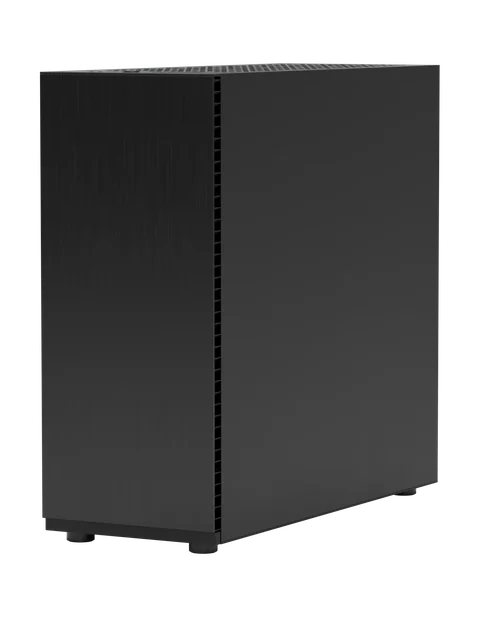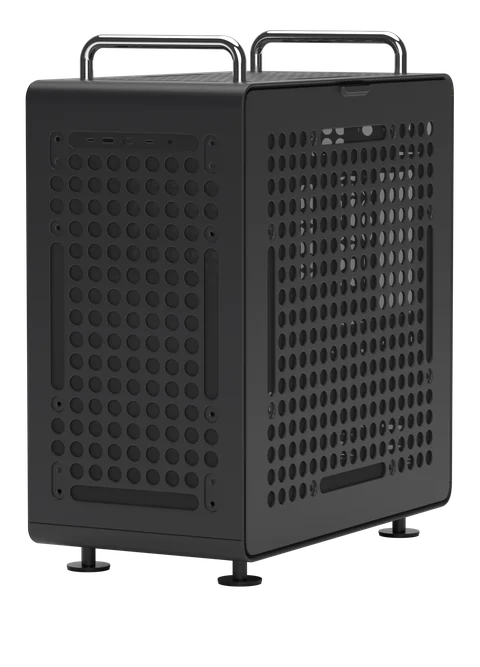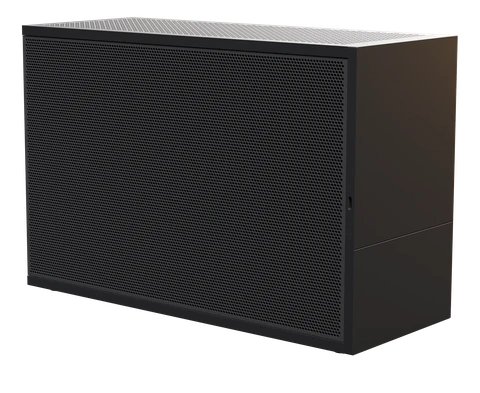
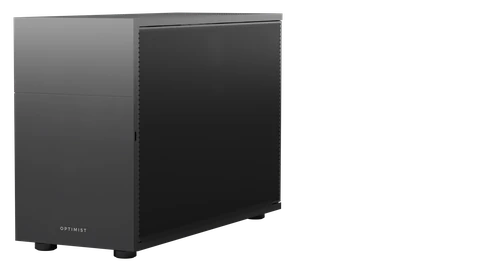




We size the system by the mesh it has to hold.
The Ansys Fluent GPU solver and M-Star CFD keep the whole case in GPU memory. In Ansys Mechanical, the system’s own memory sets how big a structural model can be.

Structural models run on memory
Ansys Mechanical’s sparse direct solver keeps the factored model in system memory. Ansys’s guide puts it at 10 to 20 GB of memory for each million degrees of freedom. So the OP-S holds about 6 to 12 million, the OP-M about 25 to 51 million and the OP-X about 51 to 102 million.
Recommended systems
-
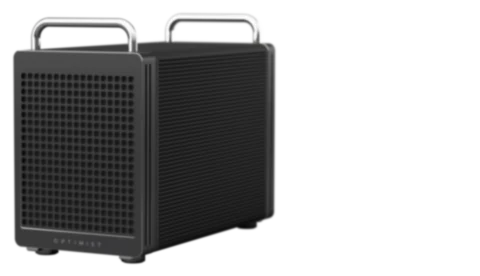
Number1 OP-S
For one engineer at the desk. For M-Star CFD, an RTX 5090 with 32 GB holds 64 to 128 million grid points. M-Star’s guide names GeForce GPUs for an entry workstation.
- One RTX PRO 6000 (96 GB) or an RTX 5090 (32 GB)
- 9.9 L, air-cooled
- AMD Ryzen or Intel Core Ultra: up to 24 cores, 128 GB of memory, 16 TB of storage
- With one RTX PRO 6000: $27,950
-
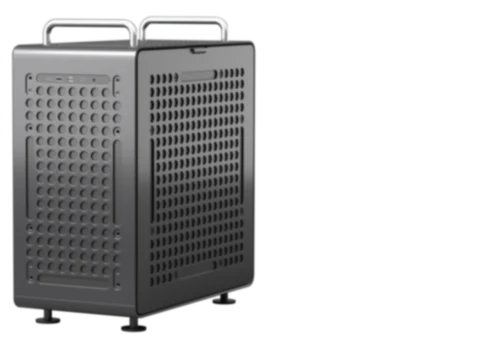
Number2 OP-M
For meshes larger than one GPU holds. Up to 512 GB of ECC (error-correcting) memory meets Fluent’s rule of at least as much system memory as all the GPUs hold.
- One to four RTX PRO 6000 GPUs, 96 GB each
- Water- or air-cooled
- AMD Threadripper: up to 64 cores, 512 GB of memory, 24 TB of storage
- With two RTX PRO 6000 Max‑Q GPUs, air‑cooled: $58,150
-
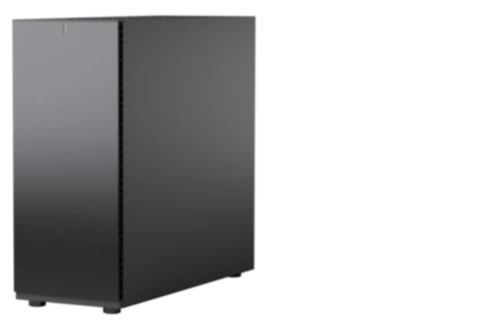
Number3 OP-X
For the biggest meshes and models. Seven GPUs take a Fluent mesh that four cannot hold. Up to 1 TB of system memory takes the largest structural models.
- One to seven RTX PRO 6000 GPUs, 96 GB each
- Water- or air-cooled
- AMD Threadripper PRO: up to 96 cores, 1 TB of memory, 32 TB of storage
- From $39,540, with one RTX PRO 6000 Max‑Q, air‑cooled


Fleet manager
Every system we ship has its own page, with its parts, its tests and its repairs.
See how it worksA system page in the sample fleet: OPC-000024, a water-cooled OP-M with four RTX PRO 6000 Max-Q GPUs, in Lab 118.