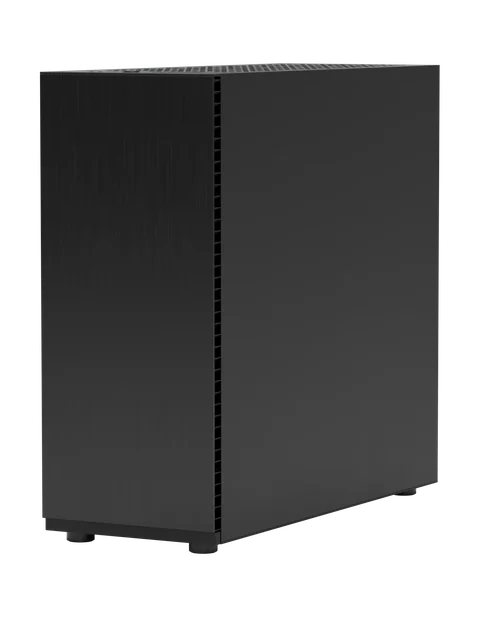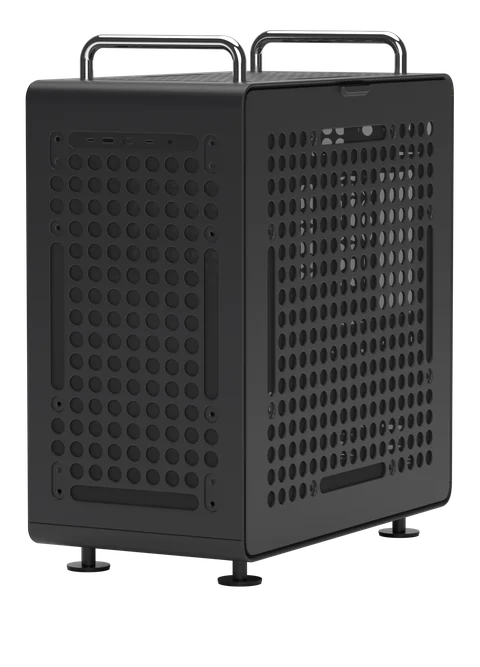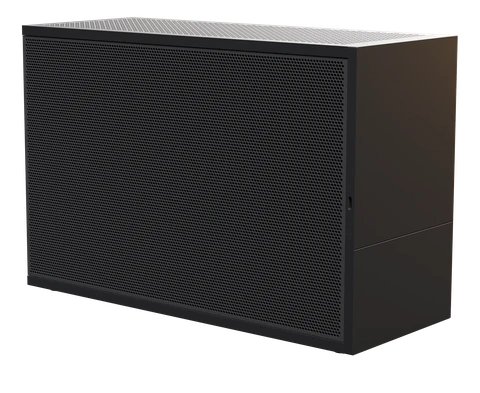
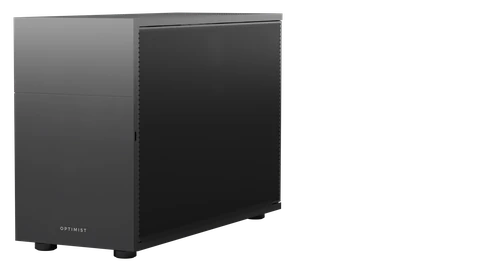





The day’s data, checked at the station.
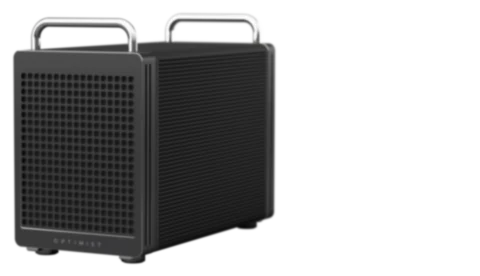
For ecology, drone maps, field trials, remote sensing and hydrography. The OP-S takes one GPU and up to 128 GB of memory in 9.9 L.

Run it in a station, a ship’s lab or a trailer
The crew turns the day’s drone images into a map at the station, then flies what it missed the next morning. It runs on wall power, not on a car’s battery. It is not rated for bumps, dust, water, heat or cold. With 64 GB of memory, one OP-S holds a 10,000-image project by Esri’s table.
Images by memoryRecommended systems
-
Number1 OP-S
For the bench of a trailer or a research vessel’s dry lab. PIX4Dfields recommends a GeForce GTX or RTX GPU with 6 GB or more. The RTX 5080 and RTX 5090 both have more.
- One RTX 5080 (16 GB), an RTX 5090 (32 GB) or an RTX PRO 6000 (96 GB)
- 9.9 L, air-cooled
- AMD Ryzen or Intel Core Ultra: up to 24 cores, 128 GB of memory, 16 TB of storage
- With one RTX 5080: $5,550
-
Number2 OP-M
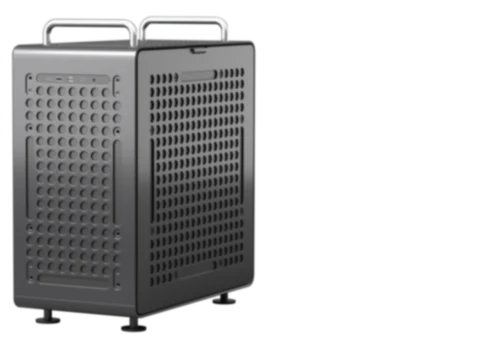
For the lab back home. It takes up to 512 GB of memory and 24 TB of drives. Esri’s table puts a 65,000-image project at 256 GB.
- One or two RTX 5080 GPUs, 16 GB each
- Air-cooled
- AMD Threadripper: up to 64 cores, 512 GB of memory, 24 TB of storage
- With one RTX 5080, air‑cooled: $13,350


Fleet manager
Every system we ship has its own page, with its parts, its tests and its repairs.
See how it worksA system page in the sample fleet: OPC-000024, a water-cooled OP-M with four RTX PRO 6000 Max-Q GPUs, in Lab 118.